5.0 /
This book has a different problem? Report it to us
Are you sure you want to report this file? Please specify the reason below
Send a report
Change your answer
Thanks for your participation!
Together we will make our library even better
5.0
Paperback
Amazon
Barnes & Noble
Bookshop.org
Want to add your book store? Contact us at support@z-lib.fm
Say “Thank you!”
to our contributors for the bookThis book appeared in the library thanks to our contributors. Tell them how important their help isSend your feedback
How much do you like this book?
What’s the quality of the file?
Download the book for quality assessment
What’s the quality of the downloaded files?
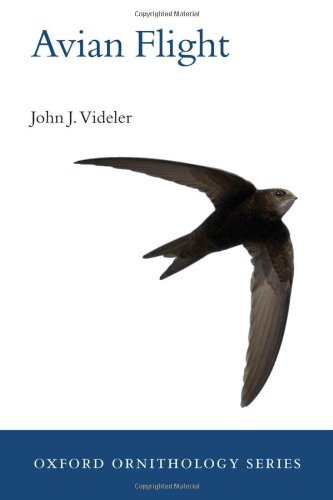
_ Bird flight has always intrigued mankind. This book provides an up to date account of our existing knowledge on the subject, as well as offering new insights and challenging some established views. A brief history of the science of flight introduces the basic physical principles governing aerial locomotion. A treatment of flight-related functional morphology concentrates on the difference in shape of the arm and hand part of the wings, on the structure and function of tails, and on the shape of the body. The anatomy and mechanical properties of feathers receive special attention. Aerodynamic principles used by birds are explained in theory by simply applying Newton’s laws, and in practice by showing the direction and velocity of the attached flow around an arm wing cross section and of the leading edge vortex flow above a hand wing. The Archaeopteryx fossils remain crucial in our understanding of the evolution of bird flight despite the recent discovery of a range of well-preserved ancient birds. A novel insight into the interactions between wings and air challenges established theories relating to the origin of bird flight. Take-off, flapping flight, gliding and landing are the basic ingredients of bird flight, and birds use a variety of flight styles from hovering to soaring. Flight muscles consisting of mosaics of specialized fibers are the engines that generate the force required to keep the wings and tail in the gliding configuration and perform work during flapping motion. The energy required to fly can be estimated or measured directly, and a comparison of empirical results provides insights into the trend in metabolic costs of flight of birds varying in shape and mass from hummingbirds to albatrosses. Read more
Categories:
Nature, Animals & Pets – Birds
Content Type:
Books
Year:
2005
Publisher:
Oxford University Press
Language:
English
Pages:
275
ISBN 10:
1423786602
ISBN 13:
9781423786603
Series:
Oxford ornithology series 14
File:
PDF, 3.98 MB
Your tags:
IPFS:
CID , CID Blake2b
english, 2005
Suggest correction
Report problem
Report a problem
File opens
Yes
No
Appropriate file type
Yes
No
Description matches
Yes
No
Are you sure you want to report this file?
Please specify the reason below
Check Yes if
Check Yes if
Check Yes if
you were able to open the file
the file is a book
the file is an article
the file is a comic book/manga
Title, Author and Language of the file match the book description. Ignore other fields as they are secondary!
Check No if
Check No if
Check No if
the file is damaged
the file is DRM protected
the file is not a book (e.g. executable, xls, html, xml)
the file is a book excerpt
the file is a magazine
the file is a test blank
the file is a spam
Title, Author or Language of the file do not match the book description. Ignore other fields.




Reviews
There are no reviews yet.